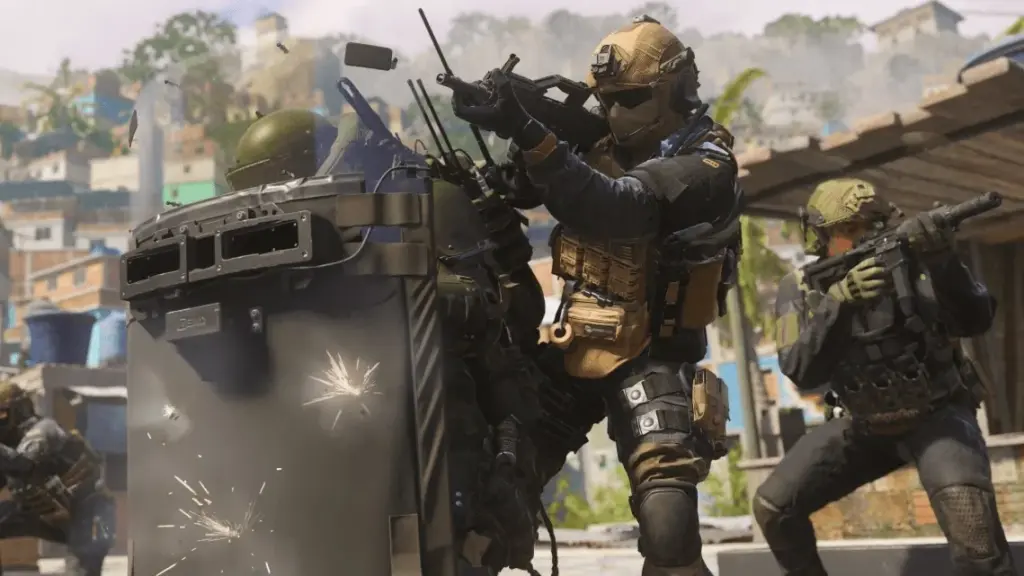
The release of Call of Duty: Modern Warfare III marks a fascinating chapter in the long-running franchise. Developed primarily by Sledgehammer Games, with support from various other Activision studios, this iteration attempts to bridge the gap between nostalgia and modern tactical shooter mechanics. It represents a direct sequel to the 2022 title, yet it drastically shifts the core gameplay philosophy, aiming to address community feedback regarding pacing, movement, and weapon handling.
This comprehensive analysis breaks down every facet of Modern Warfare 3, evaluating its campaign structure, the overhauled multiplayer experience, the ambitious open-world Zombies mode, and the underlying technical performance across platforms. By examining these elements objectively, players and enthusiasts can better understand where the game excels and where its foundational mechanics show strain.
The Single-Player Campaign: A Shift in Narrative Structure
Historically, Call of Duty campaigns have been defined by highly scripted, cinematic, linear set-pieces that guide the player through a blockbuster-style narrative. Modern Warfare 3 introduces a controversial departure from this formula with the implementation of Open Combat Missions (OCMs).
The Mechanics of Open Combat Missions
Instead of funneling players down a predetermined path, OCMs drop the player into a sandbox environment—often utilizing sectioned-off areas of the Warzone map, Urzikstan. Players are given an objective and the freedom to complete it using stealth, all-out combat, or a mix of both. Armor plates, loadout crates, and vehicle traversal are prominent features in these missions.
While this design offers a layer of tactical freedom, critical evaluations of the campaign’s pacing note that the reuse of multiplayer assets strips away some of the bespoke, handcrafted tension that the series is known for. The narrative continues the pursuit of the iconic antagonist Vladimir Makarov, but the fragmented nature of the OCMs often disrupts the emotional weight and momentum of the story.
Linear High Points
When the game returns to its traditional linear roots, it shines. Missions involving vertical infiltration or claustrophobic tactical sweeps showcase the engine’s impressive lighting and audio design. However, these moments are fewer than in previous iterations, making the overall single-player offering feel more like an experimental bridge rather than a standalone cinematic achievement.
Multiplayer: A Return to Fast-Paced Tactical Mastery
The multiplayer component is undeniably the core focus of Modern Warfare 3, and it is here that the game makes its most significant mechanical adjustments. Sledgehammer Games made a deliberate pivot from the slower, more deliberate pacing of its predecessor, opting instead for a highly kinetic, movement-heavy experience.
Movement Mechanics and Tactical Agility
The defining characteristic of the multiplayer sandbox is the revitalization of advanced movement tech. The reintroduction of “slide cancelling”—a mechanic that allows players to terminate a slide animation prematurely to maintain momentum and immediately fire—has drastically increased the pace of engagements. Furthermore, reload cancelling and faster mantle speeds mean players are rarely locked into vulnerable animations.
This shift caters heavily to aggressive playstyles. Detailed analysis of multiplayer mechanics highlights that the increased base health (from 100 to 150 points) significantly alters the Time to Kill (TTK). A longer TTK rewards sustained accuracy and tracking, rather than strictly reacting first, widening the skill gap in one-on-one gunfights.
The Nostalgia Factor: Map Design
In an unprecedented move, Modern Warfare 3 launched with all 16 original maps from the 2009 classic, Modern Warfare 2, rebuilt from the ground up. Maps like Rust, Terminal, Highrise, and Favela retain their original layouts while benefiting from modern graphical overhauls.
- Flow and Spawns: Playing these older maps with modern, faster movement mechanics changes their fundamental flow. Distances that once took careful navigation can now be closed rapidly.
- Visual Clarity: The remastered maps feature improved lighting and reduced visual clutter, aiding in target acquisition.
- Community Reception: Retrospective map design reviews suggest that while relying heavily on nostalgia is a safe play, the timeless three-lane and asymmetric designs of the 2009 era hold up remarkably well in today’s competitive landscape.
Gunsmith and Aftermarket Parts
The weapon customization system expands upon the foundation laid in the previous year. The most notable addition is the concept of “Aftermarket Parts” or Conversion Kits. These high-level unlocks fundamentally alter how a weapon behaves—turning a burst-fire assault rifle into a fully automatic powerhouse, or converting a heavy machine gun into a highly mobile bullpup configuration. This allows for deep experimentation, ensuring the meta remains fluid as players discover new, unexpected loadout synergies.
Modern Warfare Zombies (MWZ): An Open-World Experiment
Departing from the traditional, round-based, claustrophobic survival mode pioneered by Treyarch, Modern Warfare 3 introduces an open-world Zombies experience built on the extraction shooter mechanics of DMZ.
The Gameplay Loop
Set on the expansive Urzikstan map, lobbies of up to 24 players (in squads of three) deploy with a 45-minute timer. The map is divided into three concentric threat zones. The outer edges feature low-level zombies and easy contracts, while the central tier is highly lethal, requiring fully “Pack-a-Punched” weapons and coordinated team tactics.
The primary objective is to complete contracts, gather resources (Essence), locate high-tier loot schematics, and successfully extract before the storm consumes the map. Failing to extract results in the loss of all equipped gear.
Collaboration Over Competition
Unlike traditional extraction shooters, MWZ is strictly Player vs. Environment (PvE). Squads frequently cross paths and assist each other in taking down massive elite enemies or reviving downed players. Comprehensive guides to the Urzikstan zombie modes often emphasize that this cooperative, low-stress environment provides a refreshing palate cleanser from the hyper-competitive multiplayer lobbies, though some veteran players lament the absence of the classic round-based survival tension.
Technical Performance and Optimization
A modern shooter requires airtight technical performance to ensure fairness and responsiveness. Running on an upgraded version of the IW9 engine, the game scales impressively across varying hardware generations.
Console Performance (PS5 and Xbox Series X/S)
On current-generation consoles, the game targets a dynamic 4K resolution at 60 frames per second (fps) with remarkable stability. For competitive players, the inclusion of a 120Hz mode is vital. When connected to a compatible display, this mode drops the internal resolution but doubles the frame rate, drastically reducing input latency and providing a smoother tracking experience during chaotic firefights.
According to in-depth hardware performance breakdowns, the engine efficiently utilizes temporal upscaling to maintain visual fidelity even when rendering at lower internal resolutions to hit high frame rate targets.
PC Optimization and Upscaling Tech
On PC, the game offers a dizzying array of graphical settings. The integration of modern upscaling technologies is a standout feature. The game supports Nvidia’s DLSS 3 (including Frame Generation for 40-series cards), AMD’s FSR, and Intel’s XeSS.
Utilizing DLSS 3 frame generation technology allows players with high-end hardware to completely saturate 240Hz and 360Hz monitors without sacrificing graphical quality. PC benchmarks indicate that the engine is generally well-optimized, though high VRAM (Video RAM) allocation is necessary for maximum texture resolution.
Server Stability and Network Code
A persistent point of technical scrutiny in competitive shooters is server tick rate and network stability. While the game benefits from robust infrastructure, players occasionally report instances of “packet burst”—a phenomenon where network data is momentarily delayed and then rapidly applied, causing stuttering independent of hardware frame rates. Staying informed on official patch notes and network updates is crucial for players tracking improvements to server-side hit registration and latency optimization.
Evolution of Combat Mechanics: A Structural Comparison
To understand the core differences in the multiplayer ecosystem, it is helpful to contrast the mechanics of Modern Warfare II (2022) with Modern Warfare III (2023).
| Gameplay Mechanic | Modern Warfare II (2022) | Modern Warfare III (2023) | Impact on Gameplay |
| Base Player Health | 100 HP | 150 HP | Increases Time to Kill (TTK); rewards consistent accuracy. |
| Slide Cancelling | Removed/Heavily penalized | Fully integrated | Significantly increases movement speed and aggressive flanking. |
| Reload Cancelling | Stage-based (must finish animation) | Instant (can fire immediately) | Reduces vulnerability during intense firefights. |
| Minimap Behavior | Unsuppressed fire hidden on map | Classic Red Dots return | Allows for better spatial awareness and enemy tracking. |
| Perk System | Timed unlock throughout match | Gear-based (Vest, Gloves, Boots) | Perks are active immediately at spawn, allowing tailored builds. |
Actionable Advice for Competitive Optimization
For players looking to refine their experience and perform at a higher level, optimizing both in-game settings and gameplay strategies is essential.
1. Fine-Tune Controller and Mouse Settings
For controller players, altering the aim response curve type to “Dynamic” is widely considered the optimal choice for snapping to targets. Additionally, ensuring the Field of View (FOV) is set between 100 and 110 provides a broader peripheral vision without creating a “fish-eye” distortion that makes targets appear too small.
2. Leverage the Gunsmith Wisely
Do not blindly attach items to every weapon slot. Every attachment comes with a penalty—often to Aim Down Sight (ADS) speed or sprint-to-fire times. Focus on balancing recoil control with mobility. Utilizing unsuppressed muzzles that mitigate horizontal recoil often yields a more predictable firing pattern than heavy suppressors.
3. Master the Movement Loop
Understanding the mechanics of movement is just as important as marksmanship. Practice combining a tactical sprint into a slide, cancelling the slide by aiming down sights, and instantly acquiring a target. This “camera-breaking” movement makes you an incredibly difficult target for enemies holding static angles.
4. Optimize Visual Clarity
Navigate to the interface settings and adjust the color customization. Changing the enemy UI color to a bright, vibrant hue (like hot pink or bright yellow) makes enemy markers pop against the muted, realistic color palettes of the game environments. Additionally, turning off motion blur, weapon blur, and depth of field is essential for maintaining clear visibility during rapid movement. PC optimization guides regularly cite these settings as the easiest way to improve reaction times.
Frequently Asked Questions
Does the progress from Modern Warfare 2 carry over to Modern Warfare 3?
Yes, in a system officially termed “Carry Forward,” the vast majority of weapons, operators, camos, and cosmetic blueprints unlocked in the 2022 title are fully accessible in the 2023 release. This preserves player investment but also leads to an overwhelmingly large initial weapon pool.
Is Modern Warfare Zombies completely free-to-play like Warzone?
No. While it shares mechanics and a map with the free-to-play Warzone modes, Modern Warfare Zombies is considered a premium mode and requires the purchase of the full Modern Warfare 3 game to access.
How does the Gear-based perk system work?
Instead of abstract “perks,” players equip tactical gear. For example, wearing “Covert Sneakers” completely eliminates footstep audio, replicating the classic Ninja or Dead Silence perk. Choosing a specific “Vest” dictates how many tactical/lethal grenades you can carry and which gear slots are available, forcing players to make strategic compromises.
What are the minimum PC requirements for a stable 60 fps?
To achieve a stable 60 fps at 1080p on standard settings, the recommended specifications include an Intel Core i5-6600 or AMD Ryzen 5 1400, paired with at least an NVIDIA GeForce GTX 1060 or AMD Radeon RX 580, and 16GB of RAM. Installing the game on a high-speed SSD is mandatory for asset streaming and avoiding severe stuttering.
Final Reflections on the Modern Warfare 3 Experience
Evaluating Call of Duty: Modern Warfare 3 requires looking at its distinct parts rather than demanding cohesive perfection. From a purely mechanical standpoint, the multiplayer component is a triumph of responsive, high-speed tactical action. By reverting to classic movement mechanics, implementing a 150-health pool, and returning to beloved map designs, the developers successfully course-corrected issues that frustrated the competitive community in prior years. The gunplay is tight, the progression system is deep, and the moment-to-moment combat is exhilarating.
Conversely, the single-player campaign struggles to justify its structural shift. The reliance on Open Combat Missions fragments the pacing and sacrifices the bespoke, cinematic intensity that defines the franchise’s best narratives. It serves adequately as a mechanical tutorial but falls short of leaving a lasting narrative impact.
Meanwhile, the PvE open-world Zombies mode stands as a highly successful experiment in cooperative gameplay. It effectively merges the tension of extraction shooters with the satisfying, mindless horde-clearing of classic Zombies, creating an engaging loop of loot extraction and schematic hunting that appeals to both casual and dedicated players.
Technically, the game operates as a highly refined product. The integration of advanced upscaling tools on PC and the rock-solid 120Hz performance on current-generation consoles ensure that players have the tools necessary to compete at the highest level without hardware bottlenecks holding them back.
Ultimately, Modern Warfare 3 caters predominantly to the dedicated multiplayer and cooperative demographics. Its focus on mechanical refinement over narrative innovation solidifies its place as a robust, mechanically superior tactical playground that rewards aggression, skill, and deep customization.