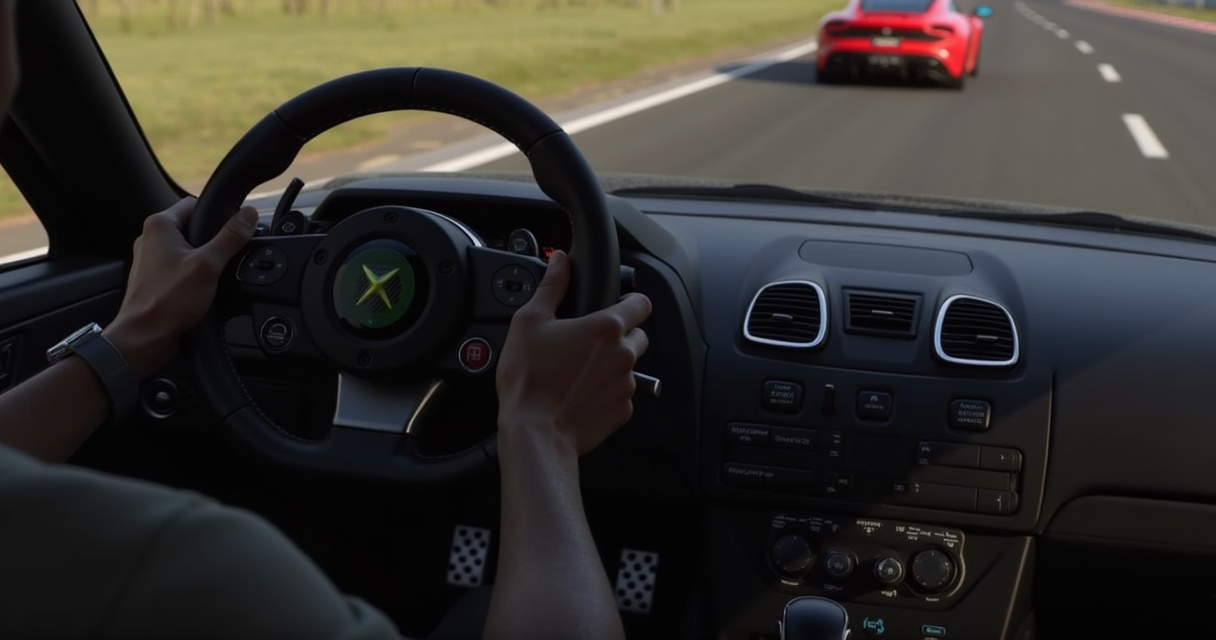
The transition from a standard controller to a dedicated racing wheel on the Xbox Series X transforms the driving experience from a casual game into a high-fidelity simulation. In Forza Horizon Six, the communication between the virtual road surface and the driver is facilitated entirely through the force feedback (FFB) system. Configuring these settings correctly is essential for detecting tire grip, weight distribution, and surface changes. Without a calibrated setup, the wheel may feel vague, overly heavy, or disconnected from the physics engine, leading to inconsistent lap times and unpredictable handling. Achieving the perfect balance requires a methodical approach to both the wheel’s internal software and the game’s advanced control menu.
Understanding the Mechanics of Force Feedback in Forza Horizon Six
Force feedback is the process of translating digital physics data into physical resistance and vibrations transmitted through the steering column. In Forza Horizon Six, the system relies on several layers of data, including pneumatic trail, road detail, and mechanical self-alignment. When a vehicle enters a drift or hits a bump, the game sends a signal to the wheel motor to adjust resistance accordingly.
If the force feedback is set too high, the wheel may “clip,” a phenomenon where the motor reaches its maximum torque capacity and loses the ability to distinguish between subtle road textures and heavy cornering forces. This results in a plateau of resistance where the driver loses the ability to feel the exact moment of tire slip. Conversely, settings that are too low fail to provide enough information to correct oversteer or judge the grip limit of the tires. Proper configuration ensures that the force feedback remains within the linear range of the motor, providing clear, tactile cues during high-speed maneuvers.
Essential Calibration Steps for Xbox Series X Racing Wheels
Every steering wheel manufacturer, whether utilizing belt-driven, gear-driven, or direct-drive technology, has specific baseline requirements for optimal performance. Before adjusting settings within the Forza Horizon Six menu, ensure the wheel firmware is updated via the manufacturer’s desktop application. Firmware updates often include critical patches for Xbox compatibility that directly influence how the console communicates with the hardware.
Once the hardware is updated, the initial configuration should focus on the “Force Feedback Scale” and “Steering Self-Alignment.” The scale acts as a master volume for the force feedback intensity. It is recommended to start at 50% and incrementally increase the value until the wheel provides firm resistance without inducing unintended oscillation or vibration on straightaways. Steering Self-Alignment determines how aggressively the wheel returns to the center position. A higher value aids in drifting and recovering from slides, while a lower value provides a more relaxed steering feel suitable for cruising or high-speed touring.
Analyzing Advanced Force Feedback Settings for Precision
Beyond the primary scale, Forza Horizon Six offers granular control over specific physical parameters. These settings refine the driving experience by isolating different types of feedback:
- Mechanical Trail Scale: This setting influences how the wheel communicates the connection between the tire patch and the road. Increasing this value makes the wheel feel more sensitive to the weight of the car as it shifts during cornering.
- Force Feedback Minimum Force: This parameter addresses the “dead zone” at the center of the wheel. By increasing this value, the wheel provides a constant baseline of resistance, ensuring that even small inputs are translated into tangible movement.
- Road Detail Scale: This setting controls the intensity of surface imperfections, such as gravel, rumble strips, and pavement cracks. High settings provide maximum immersion but can lead to excessive noise and motor fatigue on long sessions.
- Load Sensitivity: This adjusts how the wheel reacts to the vertical load on the suspension. It is particularly useful for detecting weight transfer during heavy braking or acceleration.
Comparison of Wheel Settings for Different Driving Styles
Different driving disciplines require unique force feedback profiles to maximize performance. The following table illustrates how settings should be adjusted based on the intended driving style in Forza Horizon Six.
| Setting | Drift/Slide Profile | Circuit/Grip Profile | Off-Road/Rally Profile |
|---|---|---|---|
| Force Feedback Scale | High (80-90%) | Medium (60-70%) | Medium (50-60%) |
| Steering Self-Alignment | Very High | Moderate | High |
| Mechanical Trail | High | Moderate | Low |
| Road Detail Scale | Low | High | Very High |
| Minimum Force | Medium | Low | High |
Troubleshooting Common Force Feedback Issues
Common issues such as wheel oscillation—where the wheel rapidly shakes left and right on straights—are usually caused by the “Force Feedback Understeer” or “Force Feedback Minimum Force” being set too high for the specific wheel’s motor strength. If oscillation occurs, reduce these values by 5-10% increments until the wheel remains stable.
Another frequent concern is the feeling of “numbness” in the steering. This often occurs when the damping or friction settings are too high, effectively masking the feedback from the tires. Reducing the steering damping setting allows for a more “live” feeling, where the driver can sense the exact point where the front tires begin to lose traction. Always test changes in a controlled environment, such as a test track or a wide-open airport runway, before applying settings to a competitive race event.
Frequently Asked Questions (FAQ)
Why does my wheel feel heavy when driving at low speeds?
This is often caused by a high “Mechanical Trail” or “Minimum Force” setting. These values force the motor to provide resistance even when the car is stationary or moving slowly, which can be adjusted in the advanced control menu.
What is the difference between FFB scale and steering sensitivity?
The FFB scale controls the physical resistance provided by the motor, while steering sensitivity determines the ratio of wheel rotation to virtual steering input. For the most realistic experience, steering sensitivity should generally remain at the default setting.
Can individual car setups affect force feedback?
Yes. Adjusting tire pressure, suspension stiffness, and alignment in the car tuning menu will directly change how the car feels through the wheel. If the feedback feels off after a tuning change, revisit the global settings to ensure they still match the new driving characteristics.
Does the choice of wheel brand change the optimal settings?
Absolutely. Direct-drive wheels require different damping and friction settings compared to entry-level belt-driven wheels. Always consult the manufacturer’s specific documentation for base-level recommendations before fine-tuning within Forza Horizon Six.
Conclusion
Configuring optimal force feedback on Xbox Series X racing wheels for Forza Horizon Six is a process of iterative refinement. By understanding the relationship between the game’s physics engine and the physical capabilities of the steering hardware, drivers can create a responsive, immersive, and highly accurate driving environment. Start with the master scale and move through the granular settings, testing each adjustment on various surface types to ensure consistent performance across all vehicle classes. Maintaining a balanced setup not only improves lap times but also extends the longevity of the hardware by preventing unnecessary motor strain. As driving skills evolve, revisiting these settings periodically will ensure that the connection between the driver and the virtual car remains as sharp and intuitive as possible.
Featured Image Credit: Generated/Sourced via Runware.ai.
Disclaimer: This article is AI-generated for informational and educational purposes. While we strive to provide high-quality context and authority, the content should not be used as professional advice. The author/website assumes no liability for external links or factual omissions.