Bethesda’s massive space RPG dropped players into a universe with over 1,000 planets, hundreds of missions, and a character-building system deep enough to spend hours in before ever leaving the starting area. For anyone new to Starfield, that scale can feel more overwhelming than exciting. The good news is that getting off to a fast, efficient start is entirely achievable — if you know which levers to pull first.
This guide breaks down everything a beginner needs to start strong in Starfield: the right background choices, the smartest early skills, how to handle combat without burning through resources, and the core habits that separate players who thrive from those who spend twenty hours feeling lost. Whether you’re the type who reads before playing or someone who jumped in and is now course-correcting, this is the resource worth bookmarking.
Why Your Starting Choices Matter More Than You Think
Starfield uses a background system that goes far beyond cosmetic flavor. Each of the 21 available backgrounds grants three Rank 1 skills from the start — skills that would otherwise take real investment to unlock. A poorly chosen background doesn’t lock you out of anything permanently, but it does mean you’ll spend your early hours playing catch-up while others are already building momentum.
The most beginner-friendly backgrounds aren’t necessarily the most exciting ones. The Combat Medic background grants Pistol Certification, Medicine, and Wellness — a trio that gives you a weapon specialization, better healing efficiency, and increased max health. For players who expect to spend their early game in firefights (which is almost everyone), this combination is quietly one of the most practical in the game.
The Industrialist background, by contrast, provides Persuasion, Security, and Commerce. For players interested in trading, unlocking chests, and talking their way out of trouble, this creates a completely different early game — one where credits flow more freely and locked doors stop being obstacles. According to IGN’s Starfield skill tier list, Persuasion remains one of the highest-value skills in the entire game because it opens dialogue options and quest resolutions that aren’t available through any other means.
The key is to align your background with how you actually intend to play — not how you imagine you might play after 50 hours.
The Traits System: Pick Carefully, Not Randomly
Starfield also lets players choose up to three Traits, each of which comes with both a benefit and a drawback. Many beginners either skip traits entirely (a missed opportunity) or pick ones that sound cool without understanding the long-term implications.
Traits worth considering for beginners:
- Empath — Gains XP bonuses when companions approve of your actions. If you plan to travel with a crew, this accelerates leveling meaningfully.
- Taskmaster — Crew members become more effective. Good for anyone building a ship-focused or outpost-focused playstyle.
- Introvert — Boosts endurance when exploring alone. If you prefer solo play, this is a clean bonus with minimal downside.
- Kid Stuff — Unlocks unique dialogue and gives you parents in New Atlantis. The drawback: 2% of your weekly credits are automatically sent to them. Early on, that’s negligible.
Traits to approach with caution: Freestar Collective Settler and United Colonies Native grant faction-specific bonuses but limit your neutrality in faction questlines. For players who haven’t decided where their loyalties lie, taking a faction trait before understanding the political landscape of the Settled Systems is a risk.
Early Skill Investment: Where Every Point Counts
The Starfield skill tree is divided into five categories: Physical, Social, Combat, Science, and Tech. Each skill requires you to both spend a point and complete a specific challenge to rank it up further. This is a departure from many RPGs — unused skills stay stagnant regardless of how many points you have saved.
Boost Pack Training (Tech Tree)
This is arguably the single most impactful early unlock in the game. The boost pack lets you navigate terrain vertically, reach elevated positions in combat, and access areas that are completely inaccessible without it. Fandom’s Starfield wiki notes that this skill is gated behind Tech rank 0 — meaning any player can access it from the start. Prioritize it immediately.
Weightlifting (Physical Tree)
Carry weight is a constant pressure in Starfield. Resources, weapons, spacesuits, and mission items pile up fast. Weightlifting at Rank 1 adds 10 kg of carry capacity. By Rank 4, that number climbs to 100 kg with an additional 50 kg while encumbered. For players who love looting, this investment pays dividends from the first hour.
Piloting (Tech Tree)
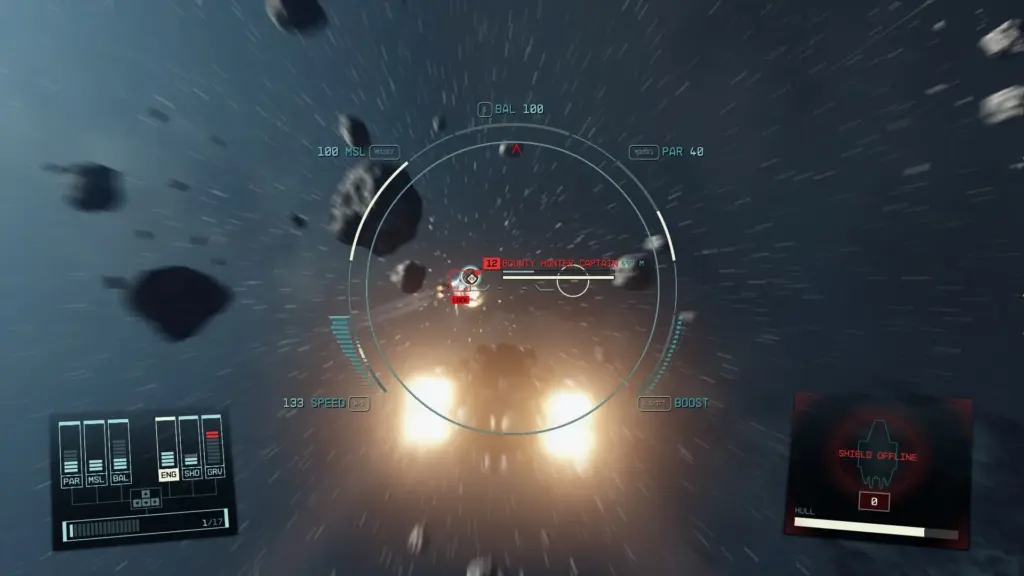
Unlocked at Rank 1, Piloting lets you use ship thrusters. At Rank 3, it allows you to pilot Class B ships. At Rank 4, Class C. Since ship combat and exploration are core to Starfield’s loop, being locked out of better ships because you haven’t invested in Piloting is one of the most common beginner mistakes.
Persuasion (Social Tree)
Persuasion opens dialogue routes that can skip entire combat sequences, resolve quests peacefully, and unlock unique outcomes. Even a single rank makes a noticeable difference in how conversations play out.
The First Two Hours: A Practical Playbook
The opening hours of Starfield funnel players through a linear tutorial before releasing them into the Settled Systems. Here’s how to move through that section efficiently.
At the mining site: Don’t rush past the crates and storage containers. Early resources — especially iron and aluminum — are used in crafting and outpost building. Grab everything that doesn’t slow you down critically.
At Constellation’s Lodge in New Atlantis: Talk to every NPC before taking your first mission. Several of them offer optional quests with meaningful rewards. Vladimir, in particular, gives access to the Starmap survey missions, which are a consistent source of XP and credits.
First ship: The Frontier is a functional starter ship, but its cargo hold is limited. Before spending credits on anything else, consider whether upgrading cargo capacity is your first ship investment. According to PC Gamer’s Starfield guide, early cargo upgrades pay for themselves within a few hours of resource gathering.
Joining factions early: The Freestar Rangers, Ryujin Industries, and UC Vanguard each offer questlines that pay well and level skills simultaneously. Joining them doesn’t require commitment — you can participate in all three simultaneously without penalty.
Combat Fundamentals: How to Win Without Burning Resources
Starfield’s combat is more tactical than it appears at first glance. Running directly at enemies in early areas is reliable, but it conditions bad habits that become costly in harder zones.
- Use cover aggressively. Starfield’s AI actively flanks players who stand still. Moving between cover points keeps enemies repositioning instead of focusing fire.
- Aim for weak points. Robot enemies have exposed joints. Humans in spacesuits have visors. Targeting these areas deals disproportionate damage and conserves ammunition.
- Don’t neglect grenades. Many beginners hoard grenades indefinitely. In Starfield, grenades are purchasable at most vendors, making them a renewable resource. Using them against clustered enemies dramatically shortens fights.
- Status effects stack. Starfield includes elemental damage types — incendiary, electric, corrosive, and radiation. Mixing damage types creates compound status effects that deal continuous damage and debuff enemies simultaneously.
Starfield Background Comparison: Which One Fits Your Playstyle?
| Background | Starting Skills | Best For | Difficulty Without It |
|---|---|---|---|
| Combat Medic | Pistol Certification, Medicine, Wellness | Beginners wanting durability in fights | Moderate — healables are plentiful but pricey |
| Industrialist | Persuasion, Security, Commerce | Trade-focused or dialogue-heavy players | Low — skills can be bought, just slower |
| Bounty Hunter | Piloting, Targeting Control Systems, Boost Pack Training | Action/combat players | High — Piloting is critical and slow to unlock otherwise |
| Professor | Astrodynamics, Geology, Surveying | Exploration and lore enthusiasts | Low — academic skills aren’t combat-critical |
| Ronin | Dueling, Stealth, Scavenging | Stealth or melee-focused builds | Moderate — stealth builds need Stealth skill urgently |
| Space Scoundrel | Pistol Certification, Piloting, Persuasion | Balanced beginners wanting flexibility | Low — widely considered the most versatile starting package |
Credits and Economy: How to Build Wealth Without Grinding
The Starfield economy is generous to players who understand its mechanics and brutal to those who don’t. Beginners often find themselves cash-strapped despite spending hours looting because they’re missing key multipliers.
Selling contraband: Contraband items — marked with an orange icon — are illegal in most major cities but can be sold at The Key (the Crimson Fleet base) or through specific vendors. The Starfield subreddit community has documented multiple efficient contraband routes that beginners can start using within the first five hours. Always disable scanning at a city before approaching with contraband aboard.
Surveying planets: Each planet has survey data — atmospheric conditions, flora, fauna, resources — that can be sold to Vladimir at the Eye. Complete surveys reward between 2,000–5,000 credits per planet, depending on thoroughness. With a scanner and patience, this becomes a reliable passive income stream during exploration.
Mission boards: Every major city has a mission board with procedurally generated quests. Delivering cargo or clearing a location pays 3,000–8,000 credits per mission at early levels. The Akila City board tends to generate higher-value contracts than New Atlantis early on.
Investing in Commerce: The Commerce skill in the Social tree directly increases sell prices and decreases vendor prices. Even Rank 1 provides a 10% improvement — a meaningful multiplier for anyone doing consistent trading.
Ship Building: You Don’t Have to Master It Immediately
One of the most common beginner anxieties in Starfield is the ship builder. It’s complex, technical, and at first glance it looks like an entirely separate game. The reassuring truth: you don’t need to master it to succeed in the early game.
What you do need to understand: ship class determines jump range and combat capability, with Class A being basic and Class C being endgame. The Frontier can be upgraded at any ship technician in every major city — a cost-effective approach for the first 15–20 hours. And without Rank 3 Piloting, you cannot legally fly Class B ships even if you steal one.
According to Bethesda’s official Starfield support pages, ship parts have specific compatibility requirements — reactor class, power output, module attachment points — that make random experimentation expensive. Using community-verified starter ship builds from sources like NexusMods is a practical shortcut while learning the system.
Outposts: When to Build Them and Why
Outposts are Starfield’s version of base-building. They generate resources passively, serve as fast-travel points, and house crew members with passive bonuses. For beginners, they’re also one of the easiest things to invest in prematurely.
The right time to start an outpost is when you’ve identified a planet with resources your build consistently uses, you’ve unlocked at least Rank 1 of the Outpost Management skill, and you have a crew member with the Outpost Engineering skill to assign there. Gamespot’s Starfield resource guide recommends prioritizing Jemison — the planet New Atlantis sits on — for your first outpost due to its proximity to vendors and its abundance of iron and aluminum deposits.
FAQ: Starfield Beginner Questions Answered
Q: How long is the main story if I focus on it?
The main quest takes approximately 20–30 hours to complete with moderate focus. However, most players find the game’s best moments in faction questlines rather than the main story, and Starfield’s design heavily encourages side content.
Q: Can I miss important quests permanently?
Yes. Some quests are time-sensitive or tied to faction alignment choices. Taking opposing faction missions simultaneously is possible in the early game, but certain late-game decisions lock out content permanently. Saving before major choices is always advisable.
Q: What’s the best weapon for beginners?
Pistols are beginner-friendly because Pistol Certification is available in multiple backgrounds. The Equinox laser pistol, available from vendors in New Atlantis, offers reliable early-game performance with low ammo costs. For heavier options, the Constellation shotgun looted from defeated enemies in the first few areas is a consistent performer.
Q: Should I fast travel everywhere?
Fast travel is efficient, but it bypasses random encounters, distress signals, and the ambient storytelling that makes Starfield’s universe feel alive. A balanced approach — fast travel between known locations, fly manually to unexplored areas — captures the best of both options.
Q: How does New Game Plus work in Starfield?
Completing the main quest unlocks a New Game Plus mode where you restart with specific carry-overs and access to unique content unavailable in the first playthrough. Many of Starfield’s deeper narrative layers are designed specifically for NG+ runs.
Q: Is the game playable without crafting?
Yes. Crafting accelerates progression and opens certain unique items, but it’s entirely optional for the main quest and most side content. Players who dislike crafting can purchase equivalent items from vendors without significant disadvantage.
Q: What should I do if I’m constantly over-encumbered?
Invest in Weightlifting, store resources at your ship’s cargo hold regularly, and sell or discard weapons below your quality threshold. The habit of offloading cargo at the ship every 30 minutes of play prevents encumbrance from becoming a persistent problem.
Q: Are there difficulty settings?
Yes. Starfield offers multiple tiers from Story Mode through Very Hard. For beginners unfamiliar with Bethesda’s combat systems, Normal difficulty provides a reasonable challenge without punishing learning curves. Difficulty can be adjusted at any time from the pause menu.
Conclusion: Building Speed Through Informed Decisions
Starfield is a game that rewards deliberate decision-making far more than raw hours invested. The beginners who start fast aren’t the ones who play the most — they’re the ones who spend their early hours building systems that compound: choosing a background that front-loads useful skills, investing in Boost Pack Training and Piloting before they’re desperately needed, and understanding the economy well enough to avoid the constant credit shortages that slow so many new players down.
The scale of Starfield’s universe can feel like an obstacle at the start. Over a thousand planets, dozens of factions, a deep ship-building system, outpost management, and a branching main quest — it’s genuinely a lot. But each of those systems has an entry point designed to be accessible, and none of them require mastery before they begin offering returns. The game’s complexity isn’t a wall; it’s a series of doors that open in sequence, as long as you’re building in the right order.
The practical path forward: choose a background that fits your instincts (Space Scoundrel or Combat Medic for most beginners), lock in Boost Pack Training as your first skill point, explore New Atlantis thoroughly before leaving for the first mission, and keep your ship’s cargo regularly cleared so encumbrance never becomes a gameplay bottleneck. From that foundation, everything else in Starfield opens naturally.
The faction questlines offer some of the best-written content in any recent RPG. The ship builder, once approached without pressure, becomes one of the more genuinely satisfying creative systems in the genre. And the exploration — even with procedural generation doing much of the heavy lifting — produces moments of discovery that reward the investment of learning the game properly. Start informed, build deliberately, and the Settled Systems become a place worth spending hundreds of hours in rather than a source of overwhelm.