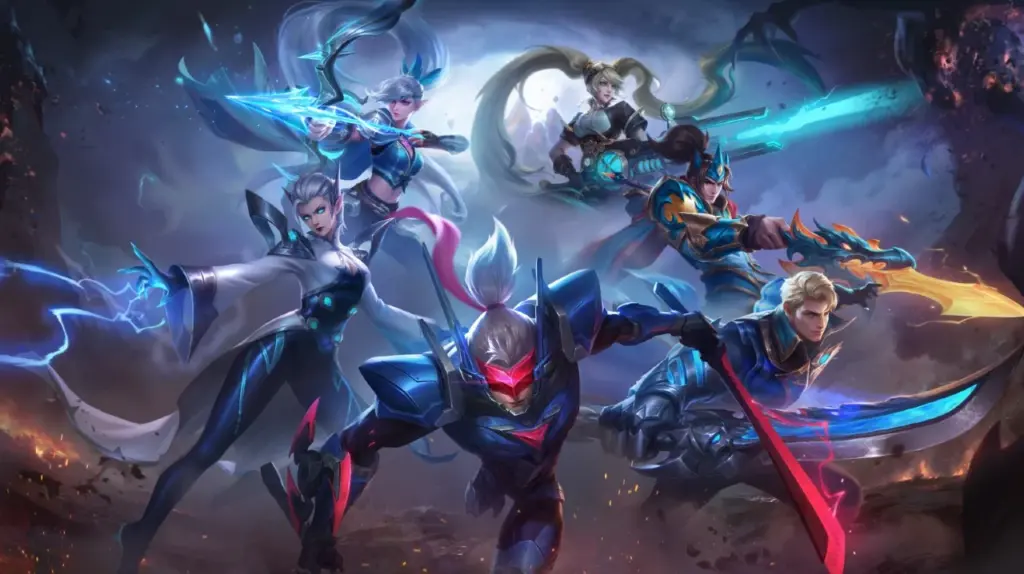
Stepping into the Land of Dawn for the first time can feel like entering a chaotic storm. With over a hundred unique heroes, complex item builds, and a map that demands constant awareness, new players often find themselves overwhelmed before their first match even concludes. However, Mobile Legends: Bang Bang (MLBB) is not merely a game of reflexes; it is a strategic ecosystem where knowledge triumphs over raw mechanical skill. Success in the early stages of a player’s journey relies heavily on selecting the right champions, understanding core mechanics, and adopting a mindset focused on objective play rather than chasing kills. By breaking down the game into manageable components, any newcomer can transition from a confused participant to a formidable force on the battlefield.
The Foundation: Understanding Roles and Map Dynamics
Before selecting a hero, it is imperative to grasp the structural framework of a MOBA (Multiplayer Online Battle Arena). The map is divided into three lanes—Gold Lane, Exp Lane, and Mid Lane—each serving a distinct economic and strategic purpose. The Gold Lane is typically occupied by the Marksman, whose primary goal is to farm minions rapidly to acquire core items that scale damage output late in the game. Conversely, the Exp Lane is a solo duel zone designed for Fighters or Tanks who need experience levels to unlock their full potential and create pressure through split-pushing. The Mid Lane acts as the central hub, requiring a Mage with strong wave-clear abilities to rotate and assist other lanes.
Understanding these roles prevents the common beginner mistake of crowding a single lane, which dilutes gold and experience income. A balanced team composition usually consists of a Tank, a Fighter, a Mage, a Marksman, and an Assassin or Support. This distribution ensures that the team has initiation tools, sustained damage, burst potential, and crowd control. New players should consult the official hero guide to review role classifications before entering a match. Ignoring role synergy often leads to a “feed” scenario where the team lacks the necessary damage to take down turrets or the durability to survive team fights.
The jungle role is equally critical, acting as the tempo controller for the entire match. The Jungler, often an Assassin or a specialized Fighter, clears neutral monsters to gain levels and gold without competing with laners for minion waves. Their primary responsibility is to monitor the map, secure objectives like the Turtle and Lord, and execute ganks (surprise attacks) on overextended enemies. Effective jungling requires deep knowledge of spawn timers and pathing efficiency. Resources like community-driven tier lists can help identify which jungle heroes are currently dominant in the meta, providing a shortcut for beginners trying to make an immediate impact.
Selecting the Right Hero: Low Mechanical Floor, High Impact
For a beginner, the ideal hero possesses a low mechanical floor but offers high utility or damage potential. These characters allow new players to focus on map awareness and decision-making rather than struggling with complex combo execution. Heroes with straightforward kits reduce the cognitive load during intense team fights, enabling the player to react to threats more effectively.
The Unstoppable Force: Tigreal
Tigreal stands as the quintessential beginner Tank. His kit is designed around crowd control and initiation, making him invaluable in coordinated play. His first skill, Attack Wave, knocks enemies into the air, while his ultimate, Implosion, pulls surrounding foes toward him. This combination can single-handedly win a team fight if timed correctly. Unlike squishy heroes, Tigreal thrives in the front line, absorbing damage that would otherwise eliminate teammates. His passive ability grants him extra physical and magic defense when his HP is low, rewarding aggressive positioning. For those learning the intricacies of engaging fights, Tigreal provides a forgiving yet impactful experience. Detailed breakdowns of his build paths can be found in comprehensive hero analysis articles that explain how to maximize his durability.
The Precision Marksman: Layla
Layla is often the first Marksman introduced to new players, and for good reason. Her passive, Malefic Gun, increases her attack range as she levels up, allowing her to attack enemies from a safe distance where they cannot retaliate. Her skill set is linear and intuitive: a slow effect, a shield, and a long-range ultimate that deals massive damage to low-health targets. While she lacks mobility, making her vulnerable to assassins, her sheer range compensates for this weakness if the player maintains proper positioning. Learning to play Layla teaches the fundamental concept of “kiting”—attacking while moving away from danger. This skill is transferable to every other Marksman in the game. Guides focusing on Marksman positioning often use Layla as the primary example for teaching spacing and target prioritization.
The Burst Mage: Eudora
Eudora represents the archetype of the burst Mage. Her gameplay loop is simple: stun the enemy with Superconductor, follow up with Forked Lightning, and finish with her ultimate, Thunder’s Wrath. This rotation can delete squishy targets within seconds. Eudora does not require complex aiming or prediction; her skills have generous hitboxes and fast cast times. She excels at punishing enemies who wander alone or fail to respect vision. Playing Eudora instills the habit of waiting for cooldowns and recognizing when an enemy is out of position. Furthermore, her ability to clear minion waves quickly allows for timely rotations to the Gold or Exp lanes. Players looking to refine their mage gameplay can reference magic damage optimization guides to understand penetration items and emblem setups.
The Resilient Fighter: Balmond
Balmond is a staple in the Exp Lane, offering a mix of sustain, true damage, and execution potential. His passive regenerates HP when near dying minions, granting him lane dominance and longevity. His second skill deals percentage-based HP damage, making him effective against tanky opponents, while his ultimate executes enemies below a certain health threshold. Balmond’s simplicity allows beginners to focus on lane management and trading hits without worrying about intricate combos. He serves as an excellent introduction to the Fighter role, demonstrating how to balance offense and defense. Strategic advice on Exp Lane matchups frequently highlights Balmond as a reliable pick for climbing ranks due to his consistent performance across various patches.
The Support Anchor: Rafaela
Support heroes are often overlooked by beginners eager to deal damage, yet a competent Support can dictate the flow of the game. Rafaela provides healing, movement speed buffs, and global presence through her ultimate, which heals all allies regardless of distance. Her ability to reveal invisible enemies and slow pursuers makes her a nightmare for assassins trying to dive the backline. Playing Rafaela teaches the importance of vision control and resource management, as the Support must constantly monitor the health bars of teammates rather than focusing solely on their own survival. The synergy between a Support and a Marksman is critical in the early game, and understanding this dynamic is essential for ranked success. In-depth discussions on Support macro play emphasize how proper support usage can turn losing games into victories.
Core Mechanics: Beyond Button Mashing
Selecting the right hero is only the first step; mastering the underlying mechanics separates average players from exceptional ones. The most critical mechanic in Mobile Legends is last-hitting. Delivering the final blow to a minion grants significantly more gold than simply being near it when it dies. Consistently securing last hits accelerates item progression, allowing a hero to reach their power spikes earlier than the opposition. This economic advantage snowballs, enabling the team to dominate objectives. Beginners should practice this in training mode until it becomes muscle memory, as the difference between 500 gold and 800 gold per wave accumulates rapidly over a 15-minute match.
Map awareness is another pillar of high-level play. The minimap is not just a decorative element; it is the primary source of information regarding enemy movements. If the enemy Jungler is not visible on the map, it is statistically probable that they are preparing a gank. Constant glancing at the minimap allows players to retreat before danger arrives or to capitalize on an overextended opponent. Vision control is facilitated by checking bushes. Entering a bush without prior vision is a common cause of death; using skills to check foliage or waiting for a Tank to lead the way mitigates this risk. Advanced players utilize the “signal” system to communicate missing enemies, a feature detailed in many communication strategy guides.
Itemization is dynamic, not static. While pre-set builds provided by the game offer a baseline, they do not account for the specific composition of the opposing team. If the enemy team consists primarily of magic damage dealers, building magic defense items early is mandatory, even for physical damage heroes. Conversely, if the enemy relies on heavy healing, items that apply “Anti-Heal” effects become priority purchases. Failing to adapt item builds to the current match context is a frequent error among novices. Analyzing item counter-strategies helps players understand when to deviate from recommended sets to gain a tactical edge.
Emblem systems and battle spells further customize a hero’s capabilities. Emblems function as a talent tree, providing stat boosts and unique effects that synergize with specific playstyles. For instance, an Assassin might prioritize emblems that enhance burst damage and cooldown reduction, while a Tank would focus on defense and HP regeneration. Battle spells, such as Flicker, Purify, or Execute, offer active utilities that can save lives or secure kills. Choosing the correct spell for the hero and the matchup is vital; a Marksman taking Flicker for escape is standard, but against a team with heavy crowd control, Purify might be the superior choice. Comprehensive emblem configuration guides provide data-driven recommendations for optimizing these settings.
Strategic Objectives: Winning the Game, Not Just the Fight
A common misconception among beginners is that the goal of the game is to achieve the highest kill count. In reality, kills are merely a means to an end; the true objective is to destroy the enemy base. Teams that focus exclusively on hunting kills often neglect towers, Turtles, and Lords, eventually losing despite having a higher score. Objectives provide permanent buffs and gold to the entire team, creating a structural advantage that is difficult to overcome.
The Turtle is the first major neutral objective, spawning early in the game. Securing the Turtle grants gold and experience to the whole team, often leading to a level advantage that facilitates tower takes. Teams should prioritize grouping up to secure the Turtle whenever it spawns, using the numerical advantage to force a fight or take the objective uncontested. The Lord, which spawns later, is even more critical. Summoning the Lord sends a powerful siege monster down a lane that pressures turrets and forces the enemy to divert resources to defend. A well-timed Lord push can end a game instantly. Strategic timelines for these objectives are often discussed in competitive meta analyses, highlighting their impact on win rates.
Tower diving, or attacking enemies under their turret, is a high-risk maneuver that beginners often attempt unsuccessfully. Turrets deal escalating damage with each consecutive hit, making prolonged engagements under them fatal. Unless there is a guaranteed kill or a significant numbers advantage, diving is generally ill-advised. Instead, players should focus on “chip damage,” whittling down tower health safely when the lane is pushed. Understanding turret aggro mechanics—specifically that turrets target minions first unless a hero attacks an enemy hero under the turret—is fundamental to siege warfare.
Rotation timing is the glue that holds strategy together. A Mid Laner who stays in the mid lane for the entire game is wasting potential influence. After clearing the wave, the Mage should rotate to the Gold Lane to help the Marksman secure a kill or take a tower. These rotations create temporary numerical advantages (e.g., 2v1 situations) that are easy to exploit. However, rotating too early risks losing minion waves and falling behind in gold. Finding the balance between farming and assisting is a skill developed through experience and observation of high-level play. Watching professional tournament replays can provide insight into how pro teams coordinate rotations and objective control.
Hero Comparison: Strengths and Weaknesses
To assist in selecting the perfect starting hero, the following table compares the recommended beginners’ picks based on key performance metrics and difficulty levels. This comparison highlights where each hero excels and what limitations a new player must manage.
| Hero Name | Role | Difficulty | Primary Strength | Key Weakness | Best For Learning |
|---|---|---|---|---|---|
| Tigreal | Tank | Low | Massive Crowd Control | Low Damage Output | Initiation & Team Fighting |
| Layla | Marksman | Low | Extreme Attack Range | Zero Mobility | Positioning & Kiting |
| Eudora | Mage | Low | Instant Burst Damage | Skill Shot Reliance | Combo Execution & Roaming |
| Balmond | Fighter | Low | Sustain & True Damage | Lack of Gap Closer | Lane Trading & Durability |
| Rafaela | Support | Low | Global Healing & Speed | Squishy & Dependent | Map Awareness & Utility |
This table illustrates that while these heroes are simple, they cover all essential aspects of the game. Tigreal teaches engagement, Layla teaches spacing, Eudora teaches burst timing, Balmond teaches sustain, and Rafaela teaches team utility. Mastering one hero from each category provides a well-rounded foundation for expanding into more complex characters later.
Common Pitfalls and How to Avoid Them
Even with the right heroes and knowledge, beginners often fall into behavioral traps that hinder progress. One of the most prevalent issues is “tunnel vision,” where a player focuses so intently on a single target or objective that they lose awareness of the surrounding environment. This leads to walking into ambushes or getting caught out of position. Combatting tunnel vision requires a disciplined habit of checking the minimap every few seconds and questioning the location of unseen enemies.
Another frequent mistake is poor resource allocation. Beginners often waste mana on unnecessary poke damage early in the lane phase, leaving them vulnerable when a real fight breaks out. Managing mana pools and cooldowns is crucial; engaging a fight without key abilities available is a recipe for disaster. Additionally, many new players ignore the shop menu during the game, failing to buy components or complete items promptly. Every second spent dead or without an item upgrade is a second where the enemy is gaining an advantage.
Communication breakdowns also plague lower-rank matches. While voice chat is an option, the ping system is often more effective for quick coordination. Failing to signal intentions, such as retreating or attacking the Lord, results in disjointed team efforts. Encouraging a positive environment and using pings constructively can improve team cohesion significantly. Toxic behavior, such as blaming teammates for losses, rarely leads to improvement and often results in reports and bans. Maintaining a constructive attitude is not just good etiquette; it is a strategic asset that keeps the team focused on winning.
Advanced Tips for Rapid Improvement
For those looking to accelerate their learning curve, analyzing replays is an invaluable tool. Reviewing one’s own matches allows for the identification of positioning errors, missed last hits, and poor decision-making moments that are easy to overlook in the heat of battle. Paying attention to death timers and asking “why did I die?” after every defeat fosters a growth mindset. Furthermore, sticking to a small pool of heroes (2-3 per role) allows for deeper mastery of specific matchups and mechanics rather than spreading attention too thin across the entire roster.
Adapting to the meta is also essential. Patches frequently adjust hero stats, item properties, and map features. What worked in one season may be obsolete in the next. Staying informed through patch notes and community discussions ensures that players are always utilizing the most effective strategies. Engaging with the community through forums or social media groups can provide tips and tricks that are not immediately obvious from gameplay alone. Finally, consistency is key; regular practice helps refine muscle memory and reaction times, turning conscious decisions into instinctive actions.
Frequently Asked Questions
Q: What is the fastest way to earn coins and diamonds for new heroes?
A: The most efficient method for earning coins is completing daily and weekly quests, which provide substantial rewards for consistent play. Participating in events and ranking up in Classic or Ranked modes also yields coin bonuses. Diamonds are harder to obtain for free but can be earned through specific login events, tournament participation, and the “Starlight Membership” tasks if purchased. Spending diamonds wisely on hero fragments or skin fragments is generally recommended over buying skins directly.
Q: Should I focus on Ranked mode immediately to climb the ladder?
A: It is advisable to spend time in Classic or Brawl modes before committing to Ranked. Ranked mode involves higher stakes and often more toxic behavior if performance is lacking. Using non-ranked modes to experiment with different heroes, test builds, and learn mechanics without the pressure of losing stars is a more sustainable approach. Once a player feels confident with at least two heroes in each role, transitioning to Ranked becomes much smoother.
Q: How do I counter heroes with high mobility?
A: Countering mobile heroes requires a combination of crowd control items and predictive gameplay. Items like Ice Queen Wand or Dominance Ice apply slows that hinder movement. Additionally, selecting heroes with hard crowd control (stuns, suppressions) is effective. From a tactical standpoint, saving disable skills for the moment the mobile hero commits to an attack, rather than using them prematurely, increases the likelihood of landing the counter-play.
Q: Is it better to play solo or with a squad?
A: Playing with a squad (party) offers a significant advantage due to improved communication and coordination. A premade team can execute strategies, synchronize ultimates, and cover roles more effectively than a group of strangers. However, solo queuing teaches adaptability and resilience, as players must learn to work with varying skill levels and attitudes. A balanced approach involves both: squad play for consistent wins and solo play for developing individual carry potential.
Q: What should I do if my team is feeding and the game seems lost?
A: Games are rarely unwinnable until the base is destroyed. If the team is struggling, the focus should shift to defensive play and catching enemies out of position. Clearing waves safely, defending high ground, and waiting for the enemy to make a mistake (such as overextending for a Lord) can turn the tide. Surrendering early denies the opportunity for a comeback, which happens frequently in Mobile Legends due to the snowball potential of late-game carries.
Conclusion
Mastering Mobile Legends: Bang Bang is a journey of continuous learning and adaptation. By starting with beginner-friendly heroes like Tigreal, Layla, Eudora, Balmond, and Rafaela, new players can build a solid foundation of game knowledge without being overwhelmed by complex mechanics. Understanding the distinct roles of each lane, prioritizing objectives over kills, and maintaining sharp map awareness are the pillars upon which victory is built. The game rewards strategic thinking, teamwork, and resilience far more than it rewards reckless aggression.
As players progress, the depth of the game reveals itself through nuanced itemization, emblem customization, and advanced macro strategies. The path from novice to expert is paved with mistakes, but each defeat offers a lesson that contributes to long-term improvement. By leveraging authoritative resources, staying updated with the evolving meta, and maintaining a positive, analytical mindset, anyone can rise through the ranks and find success in the Land of Dawn. The battlefield awaits, and with the right preparation, every match becomes an opportunity to demonstrate skill, strategy, and mastery.