The difference between a player who consistently tops the leaderboard and one who struggles to secure a single elimination often comes down to milliseconds and millimeters. In Call of Duty Mobile, a title that has redefined mobile first-person shooters since its launch, success is rarely accidental. It is the result of meticulously tuned settings, scientifically chosen attachments, and a deep understanding of the game’s mechanics. While raw reflexes play a role, the true equalizer lies in the configuration of the loadout and the sensitivity settings. This guide dissects the optimal configurations for competitive play, moving beyond guesswork to provide a data-driven approach to dominating the battlefield.
The Foundation: Optimizing Control and Sensitivity
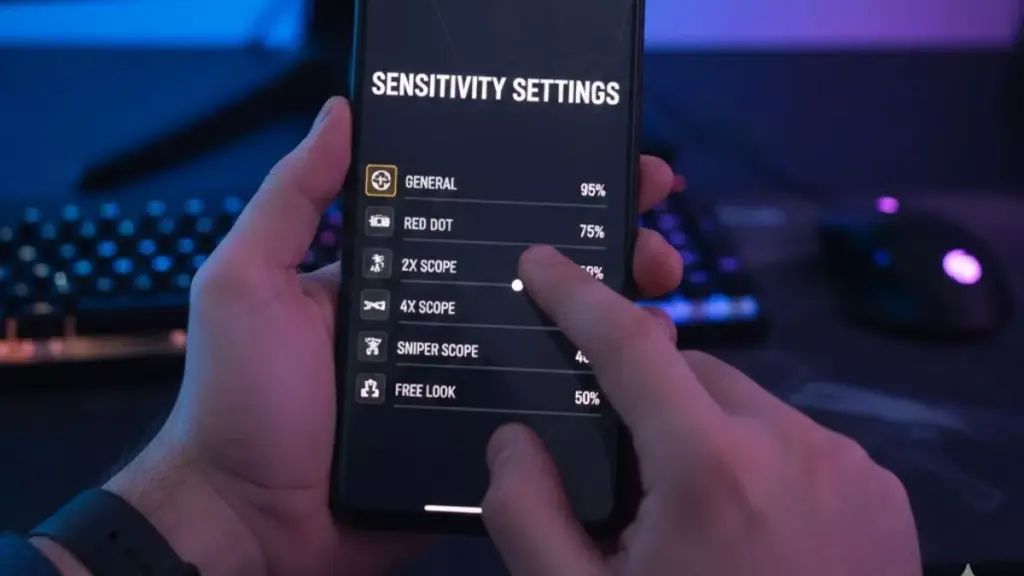
Before selecting a weapon, a player must ensure their digital interface responds exactly as their brain intends. The default settings in Call of Duty Mobile are designed for accessibility, not competitive precision. Adjusting these parameters is the first step toward professional-grade performance. The most critical adjustment involves the sensitivity settings, which dictate how quickly the camera moves in response to touch input.
Many players make the mistake of setting their sensitivity too high, believing it allows for faster turns. However, excessive sensitivity introduces “jitter,” making it nearly impossible to track moving targets at medium to long ranges. Competitive players typically opt for a lower general sensitivity, allowing for precise micro-adjustments when aiming down sights (ADS). The official Call of Duty Mobile support page offers a breakdown of how different sensitivity sliders interact, emphasizing that finding the perfect balance requires iterative testing in the training range rather than copying a pro player’s settings outright. Every device has different screen responsiveness, meaning a setting that works on an iPad may feel sluggish or twitchy on an Android smartphone.
Fixed speed acceleration is generally preferred over distance-based acceleration by high-level players. With fixed speed, the rotation speed remains constant regardless of how fast the finger swipes, building consistent muscle memory. Distance-based acceleration can lead to inconsistent aim, where a quick swipe might overshoot a target while a slow swipe falls short. For those looking to refine their touch controls, resources like Pocket Gamer’s comprehensive guides often highlight how top-tier players utilize the “Gyroscope” feature for recoil control. By tilting the device slightly downward while firing, players can counteract vertical climb without sacrificing thumb movement for horizontal tracking.
Another often-overlooked setting is the field of view (FOV). Increasing the FOV allows players to see more of their peripheral vision, which is crucial for spotting enemies flanking from the sides. However, raising the FOV too much can make distant targets appear smaller and harder to hit. A balanced FOV setting, usually between 75 and 85 depending on the device aspect ratio, provides a strategic advantage without compromising aim precision. Additionally, enabling the “Quick Weapon Switch” option in the basic settings menu can shave vital fractions of a second off weapon swaps, a feature that proves indispensable when transitioning from a sniper rifle to a secondary SMG in close-quarters combat.
The Meta Assault Rifle: Balancing Range and Mobility
Assault rifles (ARs) serve as the backbone of most loadouts due to their versatility. They are effective at almost all engagement distances, making them the safest choice for players who want to adapt to any situation. Currently, the KN-44 and the AK-47 remain staples in the competitive meta, though the specific “best” weapon shifts with every seasonal update. The key to maximizing an AR’s potential lies in the attachment selection, which must align with the intended playstyle.
For players who prefer holding angles and controlling lanes, prioritizing range and accuracy is essential. Attaching a Monolithic Suppressor not only increases the effective damage range but also keeps the player off the enemy’s minimap when firing. This stealth advantage is frequently discussed in analysis by GameRant’s tactical breakdowns, which note that remaining invisible on the radar allows for aggressive positioning without immediate retaliation. Pairing the suppressor with a Marksman Foregrip or a Commando Foregrip significantly reduces vertical recoil, ensuring that burst fire remains tight even at 40 meters.
Conversely, objective-based modes like Domination or Hardpoint often require high mobility. In these scenarios, an AR build focused on ADS speed and movement velocity outperforms a long-range setup. Replacing the heavy barrel with a lightweight stock and using a granulated grip tape can drastically improve sprint-to-fire time. This allows a player to round a corner and engage an enemy before the opponent can react. The Dexerto meta reports regularly track win-rate statistics for various attachment combinations, revealing that mobility-focused AR builds often yield higher kill-death ratios in fast-paced respawn modes.
Ammunition type is another variable that demands attention. While extended magazines provide more bullets before reloading, they often come with penalties to ADS speed and movement. In skilled hands, managing ammo consumption through controlled bursts is more effective than relying on a 60-round magazine that slows down reaction times. For engagements where time-to-kill (TTK) is critical, switching to high-caliber ammunition can increase damage per shot, potentially reducing the number of bullets needed to eliminate an opponent. However, this comes at the cost of increased recoil, requiring superior aim discipline.
Dominating Close Quarters: The Submachine Gun Advantage
When the battle moves indoors or into tight alleyways, the Submachine Gun (SMG) becomes the undisputed king. These weapons boast the highest fire rates and the fastest mobility stats in the game, allowing players to strafe unpredictably while pouring damage into enemies. The Fennec and the QQ9 are perennial favorites, known for their blistering TTK in close proximity. However, an SMG loadout built incorrectly can become useless beyond 15 meters.
The primary goal of an SMG build is to maximize hip-fire accuracy and ADS speed. Since engagements with SMGs often happen suddenly and at point-blank range, there is rarely time to aim down sights perfectly. Attachments like the OWC Laser – Tactical are non-negotiable, as they tighten the hip-fire spread, turning the weapon into a laser beam even when fired from the hip. This mechanic is vital for “run-and-gun” playstyles, where stopping to aim means death. Guides from IGN’s mobile gaming section frequently emphasize the importance of the “Stippled Grip Tape” for further enhancing hip-fire precision, noting that it allows players to win duels while moving laterally.
Recoil control remains important even for SMGs, particularly for weapons like the MSMC which can kick significantly during sustained fire. A tactical stock or a specific rear grip can mitigate this horizontal drift, ensuring that the high fire rate translates into actual hits rather than wasted bullets. Furthermore, because SMGs consume ammunition rapidly, the choice between an extended mag and a fast mag depends on the player’s confidence. A fast mag reloads quicker, reducing vulnerability during a firefight, while an extended mag allows for clearing multiple enemies without interruption. In team deathmatch scenarios where spawns are chaotic, the ability to chain kills without reloading often tips the scale.
It is also worth noting the synergy between SMGs and operator skills. Using an SMG alongside the “Annihilator” or “K9 Unit” can create devastating combinations. The SMG handles the immediate threat, while the operator skill deals with grouped enemies or provides area denial. The Activision Blog often highlights seasonal changes that affect SMG damage profiles, reminding players to stay updated on nerfs and buffs that could alter the viability of specific guns. A weapon that dominates one season may fall off the next due to slight adjustments in damage range or fire rate, necessitating a flexible approach to loadout creation.
Precision and Power: Sniper Rifle Configurations
For players who excel at map awareness and patience, the sniper rifle offers the most satisfying and impactful gameplay experience. Weapons like the DL Q33 and the Locus are capable of eliminating enemies with a single shot to the upper torso or head, effectively controlling entire lanes of the map. However, sniping in Call of Duty Mobile requires a distinct set of skills and attachments compared to console or PC counterparts, primarily due to the limitations of touch controls.
The most critical attribute for a mobile sniper is “aim walk speed” and ADS time. Unlike other platforms, holding a scope on a mobile device can obscure a significant portion of the screen. Therefore, attachments that reduce ADS time, such as the YKM Light Stock Short or specific barrel extensions, are paramount. This allows the sniper to peek, acquire a target, fire, and return to cover before the enemy can react. Detailed analyses on Sportskeeda’s CODM section often point out that the “Tac Laser” is essential for snipers as well, improving aim stability when holding a angle, which is crucial for landing long-distance shots on moving targets.
Perks play a massive role in a sniper’s survival. Since snipers are often stationary or moving slowly, they are prime targets for enemy UAVs and counter-snipers. Equipping the “Cold-Blooded” perk makes the player invisible to thermal scopes and AI-targeting systems, while “Ghost” hides them from UAV sweeps. This combination creates a phantom-like presence on the battlefield, allowing the sniper to reposition without fear of detection. Additionally, the “Focus” perk, which steadies aim when crouched or prone, can be the difference between a missed shot and a confirmed elimination at extreme ranges.
A common misconception is that snipers should always use high-magnification scopes. In reality, many top players opt for the classic sniper scope or even a variable zoom scope to maintain better situational awareness. High-magnification scopes introduce significant visual sway and narrow the field of view, making it difficult to track fast-moving SMG users. By using a lower magnification scope, a sniper can remain effective at medium ranges, bridging the gap between a traditional sniper and a marksman rifle. This versatility is often highlighted in tournament play, where adaptability is valued over pure range.
The Strategic Layer: Perks and Operator Skills
A weapon is only as good as the soldier wielding it, and in Call of Duty Mobile, perks define the soldier’s capabilities. The perk system is divided into three categories: Red, Green, and Blue. Each slot offers choices that fundamentally alter how a player interacts with the game world. Selecting the right combination is akin to choosing a class in an RPG, tailoring the character to specific roles within the team.
In the Red slot, “Lightweight” is the go-to choice for aggressive players who need to rotate across the map quickly to capture objectives. For those who prefer a stealthy approach, “Cold-Blooded” remains unmatched, especially in modes with heavy aerial scorestreak usage. The Green slot is arguably the most contested. “Toughness” reduces flinch when taking damage, allowing players to win gunfights even when hit first. Alternatively, “Hardline” reduces the score required to earn killstreaks, enabling faster access to powerful tools like the Counter-UAV or Stealth Chopper. Competitive guides on Pro Game Guides often suggest swapping these based on the game mode; for example, “Toughness” is vital in Search and Destroy, while “Hardline” shines in Team Deathmatch.
The Blue slot determines survivability and utility. “Dead Silence” is indispensable for flanking routes, masking the sound of footsteps and allowing players to sneak up on unsuspecting enemies. In contrast, “Alert” provides a visual cue when an enemy aims at the player from outside the field of view, acting as an early warning system against campers. For objective players, “Scavenger” ensures a steady supply of ammunition, preventing the need to retreat to resupply. The synergy between perks and weapons cannot be overstated; a sniper with Dead Silence and Cold-Blooded becomes a nightmare to locate, while an SMG rusher with Lightweight and Toughness becomes an unstoppable force in close quarters.
Operator skills add another layer of tactical depth. The “Purifier” is excellent for clearing out entrenched enemies in small rooms, while the “Gravity Spikes” offer a lethal surprise for players dropping from above. Defensive options like the “Armor” skill can turn the tide of a 1v1 duel by providing extra health absorption. Understanding the cooldown times and activation requirements of these skills is crucial. Wasting an operator skill at the wrong moment can leave a player vulnerable during a critical engagement. Strategic deployment, timed with team pushes or objective captures, maximizes their impact.
Comparative Analysis of Top Loadout Archetypes
To visualize the differences between playstyles, the following table compares the core components of the three dominant loadout archetypes currently prevalent in the competitive scene. This comparison highlights how attachment priorities and perk selections shift based on the intended role.
| Feature | The Aggressive Rusher (SMG) | The Versatile Anchor (Assault Rifle) | The Silent Sentinel (Sniper) |
|---|---|---|---|
| Primary Weapon | Fennec / QQ9 | KN-44 / AK-47 | DL Q33 / Locus |
| Key Attachment 1 | OWC Laser – Tactical (Hip-fire) | Monolithic Suppressor (Range/Stealth) | YKM Light Stock (ADS Speed) |
| Key Attachment 2 | Stippled Grip Tape (ADS Speed) | Commando Foregrip (Recoil Control) | Tac Laser (Aim Stability) |
| Red Perk | Lightweight (Movement Speed) | Lightweight or Cold-Blooded | Cold-Blooded (Stealth) |
| Green Perk | Toughness (Damage Resistance) | Hardline (Faster Scorestreaks) | Focus (Aim Steadiness) |
| Blue Perk | Dead Silence (Silent Steps) | Scavenger (Ammo Resupply) | Dead Silence or Alert |
| Ideal Range | 0 – 15 Meters | 15 – 40 Meters | 40+ Meters |
| Playstyle Goal | Flank, disrupt, and chain kills | Hold lanes and control objectives | Deny areas and pick high-value targets |
This table illustrates that there is no single “best” loadout; rather, the effectiveness depends on the map layout, game mode, and team composition. A map like “Crash” with its tight corridors favors the Aggressive Rusher, while “Crossfire” with its long sightlines rewards the Silent Sentinel. Adapting the loadout to the specific environment is a hallmark of high-level play.
Frequently Asked Questions
What is the best sensitivity setting for beginners in Call of Duty Mobile?
Beginners should start with a low to medium sensitivity setting to develop accurate aim. It is recommended to set the Standard Sensitivity to around 60-70 and the ADS Sensitivity to 40-50. Players should enter the training room and practice tracking moving targets, gradually increasing the sensitivity until they can comfortably follow enemies without overshooting. Consistency is more important than speed in the early stages.
How often do weapon stats change in Call of Duty Mobile?
Weapon stats are typically adjusted with every major seasonal update, which occurs roughly every two months. Minor tweaks can also happen during mid-season patches to address game-breaking bugs or overly dominant weapons. Players should check patch notes released by Activision before committing to grinding camos for a specific weapon, as a nerf could significantly reduce its effectiveness.
Is it better to use a controller or touch controls for competitive play?
While controllers offer tactile feedback and analog precision, the majority of the competitive Call of Duty Mobile scene is played on touch screens. Touch controls allow for faster turning speeds and instant aim adjustments that controllers struggle to match due to stick rotation limits. However, the “best” method is subjective and depends on what the player has practiced most. Console players transitioning to mobile may find a controller more comfortable initially.
Can I use the same loadout for all game modes?
Using a single loadout for all modes is possible but not optimal. Ranked matches and Search and Destroy require a more tactical, stealth-oriented setup with perks like Ghost and Cold-Blooded. In contrast, Team Deathmatch and Frontline benefit from aggressive builds with Lightweight and Hardline to maximize kill output and streak generation. Adapting the loadout to the mode’s pace and objectives yields better results.
What is the most important stat to look for when choosing a weapon?
Time-to-Kill (TTK) is generally considered the most critical stat, as it determines how quickly an enemy can be eliminated. However, TTK must be weighed against ease of use. A weapon with a theoretical lowest TTK but uncontrollable recoil is often less effective than a slightly slower weapon with laser-like accuracy. Consistency in hitting shots is more valuable than raw damage potential that cannot be utilized.
Do operator skills carry over between lives?
No, operator skills must be recharged after each use. The recharge time depends on the specific skill and whether the player has equipped the “Hardline” perk, which reduces the score needed to earn points towards the skill. Managing when to deploy the skill is crucial; saving it for a clutch moment or a coordinated team push is usually better than using it immediately upon spawning.
How does the “Meta” affect my weapon choice?
The “Meta” (Most Effective Tactics Available) represents the weapons and strategies that are currently statistically superior due to game balance. Playing meta weapons gives a slight mathematical advantage in gunfights. However, player skill and map knowledge often outweigh meta considerations. A masterfully played non-meta weapon can easily defeat a poorly played meta weapon. It is advisable to use meta weapons as a baseline but prioritize personal comfort and proficiency.
Conclusion
Mastering Call of Duty Mobile is a continuous journey of adaptation and refinement. The landscape of the game is dynamic, with seasonal updates constantly shifting the balance of power between weapons and altering the efficacy of various strategies. However, the core principles of success remain unchanged: precise control settings, optimized loadouts tailored to specific roles, and a deep understanding of the tactical layer provided by perks and operator skills.
Players who invest time in fine-tuning their sensitivity and understanding the nuances of attachment trade-offs will always hold an advantage over those who rely on default configurations. Whether it is the lightning-fast reflexes required for an SMG rush, the disciplined patience of a sniper holding a long angle, or the versatile dominance of an assault rifle anchoring a lane, success comes from aligning equipment with intent. The data supports a methodical approach; analyzing stats, reviewing patch notes, and experimenting in the training range are the habits that separate the elite from the average.
Ultimately, the “best” loadout is the one that complements the player’s unique style and decision-making process. While the meta provides a strong foundation, true mastery is found in the ability to adapt that foundation to the ever-changing chaos of the battlefield. By leveraging credible resources, staying informed on community findings, and rigorously practicing mechanical skills, any player can elevate their performance. The battlefield awaits, and victory belongs to those who prepare for it with precision and foresight.