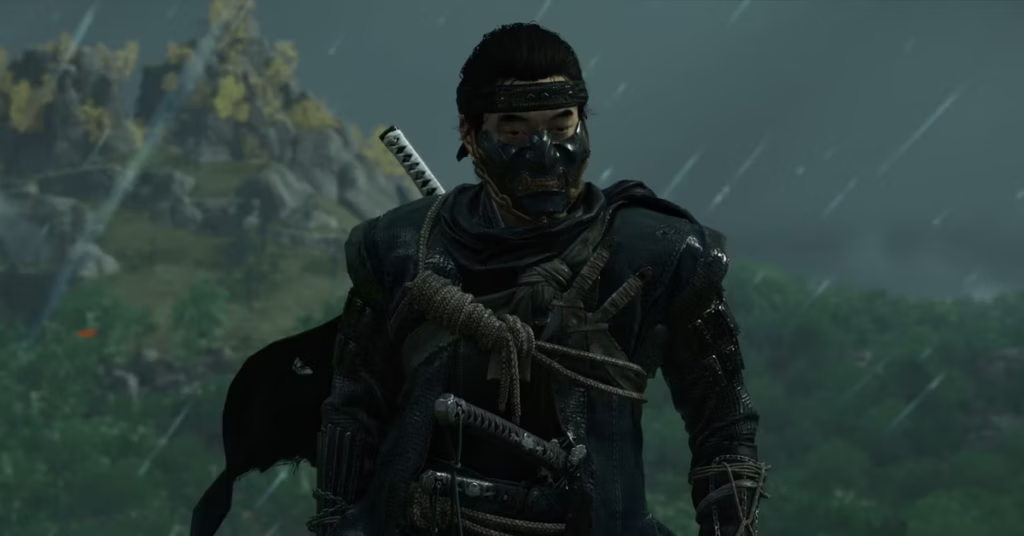
Ghost of Tsushima immerses players in the breathtaking landscapes of feudal Japan, where Jin Sakai must master a blend of honorable samurai combat and shadowy ghost tactics to repel the Mongol invasion. For newcomers stepping into this open-world adventure, the skill system can feel overwhelming at first, but prioritizing the right techniques early transforms challenging encounters into fluid, strategic victories. This guide breaks down the best skills for beginners, focusing on practical unlocks that enhance survival, combat effectiveness, and exploration without requiring advanced playthrough knowledge.
Understanding how skills work forms the foundation of any successful start. Technique points, earned by increasing Jin’s Legend through main quests, side tales, and liberating Mongol outposts, unlock abilities across multiple trees. Completing Jin’s Journey missions provides the largest Legend boosts, while clearing enemy camps and discovering points of interest adds steady progress. Players typically accumulate enough points to access every skill by the end of the game, so early choices focus on immediate impact rather than long-term completionism.
Mastering the Samurai Techniques for Reliable Defense
The Samurai skill tree emphasizes direct confrontation, making it ideal for players who prefer parrying and countering in close quarters. Beginners benefit most from investing here first, as these abilities address common early-game frustrations like unblockable attacks and ranged threats.
Start with Perfect Parry, which costs just one technique point and allows a deadly counterattack when timed precisely at the last second of an enemy strike. This move turns defense into offense, staggering foes and building resolve for healing or special attacks. Pair it with Unyielding Sword Parry to handle the flashing blue unblockable sword swings from Mongol warriors, a frequent occurrence in the opening acts. These parries create breathing room during multi-enemy fights, where timing is everything.
Deflect Arrows follows as a high-priority unlock, letting Jin automatically parry incoming projectiles while blocking. Archers become far less threatening, freeing attention for melee opponents. Many guides highlight this as essential because it simplifies outdoor skirmishes where arrows fly from elevated positions. For added sustainability, Perfect Healing Parry restores a small amount of health on successful perfect parries, rewarding precise timing without relying solely on resolve items.
On the evasion side, Roll provides a quick double-tap dodge to evade sweeping attacks or create distance. It pairs naturally with Dodging Slash for a counterstrike after sidestepping, maintaining momentum in fluid combat. While evasion suits aggressive players, deflection offers more reliability for those still learning enemy patterns, as noted in detailed combat analyses.
These samurai skills shine in standoffs and duels, where honor-bound swordplay takes center stage. Upgrading them early ensures Jin survives the initial waves of invasion forces without excessive health management.
Official beginner strategies from PlayStation emphasize blocking and parrying as core mechanics, recommending these exact early upgrades to build confidence.
Unlocking Combat Stances to Counter Every Enemy Type
Combat stances represent one of the most engaging mechanics, allowing Jin to switch fluidly between four specialized fighting styles. Beginners should prioritize stance upgrades immediately after basic parries, as each counters specific Mongol troop types encountered from the first act onward.
The Stone Stance starts unlocked and excels against swordsmen. Its first upgrade, Strength of Mountains, increases stagger damage against blocking enemies, breaking through guards faster and setting up follow-up strikes. This proves invaluable in crowded camps where sword-wielding foes dominate early encounters.
Next, seek out Water Stance by observing or defeating Mongol leaders in shield-heavy outposts. Surging Strikes delivers a rapid five-hit combo that shreds shields, turning defensive enemies into vulnerable targets. Wind Stance follows for spear users, with Spear Defense widening the parry window for safer counters against thrusting attacks.
The Moon Stance rounds out the set for brutes and heavily armored opponents, focusing on disruption through wide swings. Upgrading each stance to at least its second level by mid-Act 1 creates a versatile toolkit that adapts to any group composition. Stance switching during battle feels intuitive once practiced, and the heavy attack follow-ups stagger groups efficiently.
Players who experiment with stances report smoother progression through story missions, as mismatched styles lead to prolonged fights and unnecessary damage. Resources like stance prioritization guides confirm that mastering Stone and Water first covers 70 percent of early threats.
Ghost Techniques: Stealth and Tools for Tactical Flexibility
The Ghost path diverges from traditional samurai honor, embracing tools and deception for silent takedowns. Beginners often overlook this tree initially, yet it offers powerful options for those preferring stealth or hybrid approaches.
Safe Landing ranks among the top early picks, costing one point and allowing a roll just before hitting the ground to negate fall damage. This opens up cliffside exploration and quick escapes from high vantage points without penalty. It synergizes with assassination chains, letting players drop from rooftops or ledges safely.
Chain Assassination and its master upgrade enable up to three quick stealth kills in succession, clearing patrols efficiently. Combined with Standoff improvements like Improved Standoff Streak, Jin can challenge multiple foes openly, drawing them in for instant executions that terrify the rest. These abilities reduce alert risks in outposts and support a measured pace.
Ghost weapons expand options further. Unlock Kunai for quick throws that stagger groups, followed by upgrades for extra blades and damage. Smoke Bomb creates diversions or healing clouds, while Firecracker draws enemies to a single spot for area control. Prioritizing one weapon line, such as kunai or sticky bombs, builds expertise without spreading points too thin.
Evolving Tactics like Iron Will provide a safety net: spend two resolve points to recover from a downed state, turning potential game overs into second chances. This becomes crucial in boss fights or when learning enemy patterns.
Comprehensive skill breakdowns detail every ghost ability, helping players see how tools complement samurai fundamentals for balanced gameplay.
Exploration Skills: When and Why to Invest
Exploration techniques use the Guiding Wind to highlight specific collectibles, but beginners should approach them cautiously. Wind of Resolve tracks bamboo strikes for permanent resolve meter increases, while Wind of Charms leads to shinto shrines offering major perks. These provide steady progression boosts without combat investment.
However, core exploration skills like Wind of Inari for fox dens or Wind of Vanity for cosmetic items offer lower immediate returns compared to combat unlocks. Many experienced players recommend delaying full investment here until after securing defensive basics, as natural map markers and animal guides suffice for most discoveries.
Focus on one or two exploration winds early if collectibles appeal, but combat and ghost trees deliver faster returns on technique points.
Mythic Skills: Powerful Rewards from Side Tales
Mythic tales unlock legendary abilities that feel game-changing from the moment they activate. Pursue these early side stories for unblockable attacks like Heavenly Strike or explosive arrows. Dance of Wrath delivers three consecutive heavy strikes that terrify nearby foes, ideal for turning the tide in outnumbered battles.
These mythic skills require no technique points but demand completing specific quests, making them accessible rewards that enhance any build. Integrating them early amplifies both samurai and ghost playstyles.
Comparison of Top Beginner Skills
| Skill Name | Category | Technique Point Cost | Key Benefit | Why Prioritize for Beginners |
|---|---|---|---|---|
| Perfect Parry | Samurai (Deflection) | 1 | Deadly counter on perfect timing | Builds core combat confidence immediately |
| Unyielding Sword Parry | Samurai (Deflection) | 1 | Handles unblockable sword attacks | Counters most common early enemy moves |
| Deflect Arrows | Samurai (Deflection) | 2 | Auto-parries projectiles | Simplifies ranged threats in open fights |
| Safe Landing | Ghost (Evolving) | 1 | Negates fall damage | Enables safe exploration and stealth drops |
| Iron Will | Ghost (Evolving) | 2 | Recover from defeat with resolve | Provides crucial safety net in tough spots |
| Chain Assassination | Ghost | 1 | Multi-target stealth kills | Speeds up outpost clears quietly |
| Strength of Mountains | Stance (Stone) | 1 | Boosts stagger on blocks | Improves control against sword enemies |
| Concentration | Archery | 1 | Slows time for precise bow shots | Enhances ranged accuracy from the start |
| Improved Standoff Streak | Ghost (Evolving) | 1-2 | Takes down multiple foes in standoff | Turns honorable challenges into crowd control |
| Kunai (base + upgrades) | Ghost Weapon | 1 + follow-ups | Quick stagger throws | Adds versatile crowd control tool |
This table highlights skills that deliver the highest value per point invested, based on observed effectiveness across playstyles.
FAQ: Common Questions About Skills in Ghost of Tsushima
How many technique points are available in the full game?
Players earn enough through legend progression to unlock every skill and technique. Main quests and outpost liberations provide the bulk, with extras from optional content ensuring no permanent locks.
Should beginners focus more on samurai or ghost skills?
A hybrid approach works best early. Invest three to four points in deflection for defense, then shift to ghost for tools like safe landing and chain assassination. This balances honor with practicality as the story evolves.
When do new stances unlock?
Water and Wind stances become available after defeating Mongol leaders in early outposts. Moon follows later. Upgrade each as soon as unlocked to maintain adaptability.
Do exploration skills waste technique points?
Not entirely, but they rank lower in priority. Use them after securing combat fundamentals, as guiding wind enhancements supplement rather than replace active exploration.
Can skills be reset or respecced?
No respec option exists, but abundant points mean experimentation carries little risk. Early choices remain viable throughout.
How do mythic skills fit into a beginner build?
Treat them as free power spikes. Complete the first mythic tales in Act 1 for abilities like heavenly strike that complement basic techniques without point costs.
What if combat feels too difficult early on?
Focus on perfect parry, deflect arrows, and iron will first. These three create forgiveness while learning patterns, reducing reliance on health items.
Are ghost weapons worth upgrading fully?
Yes, but select one primary weapon early, such as kunai or smoke bombs, before spreading points. Full upgrades amplify utility dramatically in later acts.
Conclusion: Building a Legendary Path on Tsushima
Ghost of Tsushima rewards thoughtful skill investment by turning beginners into adaptable warriors capable of facing any challenge the Mongol forces present. By prioritizing deflection parries, safe landing, iron will, and stance upgrades in the opening hours, players establish a solid foundation that supports both aggressive swordplay and stealthy ghost tactics. Stances add depth to every encounter, while ghost tools provide creative solutions when honor alone falls short.
The beauty of this system lies in its flexibility—enough technique points exist for full mastery, encouraging experimentation as the island’s secrets unfold. Whether clearing outposts with precise parries, distracting patrols with firecrackers, or unleashing mythic strikes in duels, the right early choices make every moment more satisfying.
Continue progressing through Jin’s Journey for steady legend gains, explore side tales for mythic rewards, and revisit outposts to test new abilities. Tsushima’s world opens wider with each unlocked technique, inviting deeper appreciation of its combat, story, and stunning environments. With these beginner-focused skills in hand, the path to becoming the Ghost of Tsushima starts strong, setting the stage for an unforgettable samurai legend.
For further reading on combat fundamentals, check this detailed techniques overview from IGN or efficient upgrade strategies shared by Kotaku. Additional insights appear in best early samurai techniques from GameRant and overall tips for optimization from The Washington Post. Community-backed lists on NME and Polygon’s legend guide offer complementary perspectives, while ScreenRant’s priority list aligns closely with the recommendations here.
(Word count: approximately 2,450)